
Trinidad’s cultural sights
Trinidad’s cultural sights are found as much in living spaces as in formal landmarks. Across the island, temples, mosques, churches, panyards, markets, public squares, and historic buildings reveal the layers of African, Indian, European, Indigenous, Chinese, and Middle Eastern heritage that have shaped the country.
For visitors, these places offer a deeper understanding of Trinidad than scenery alone.
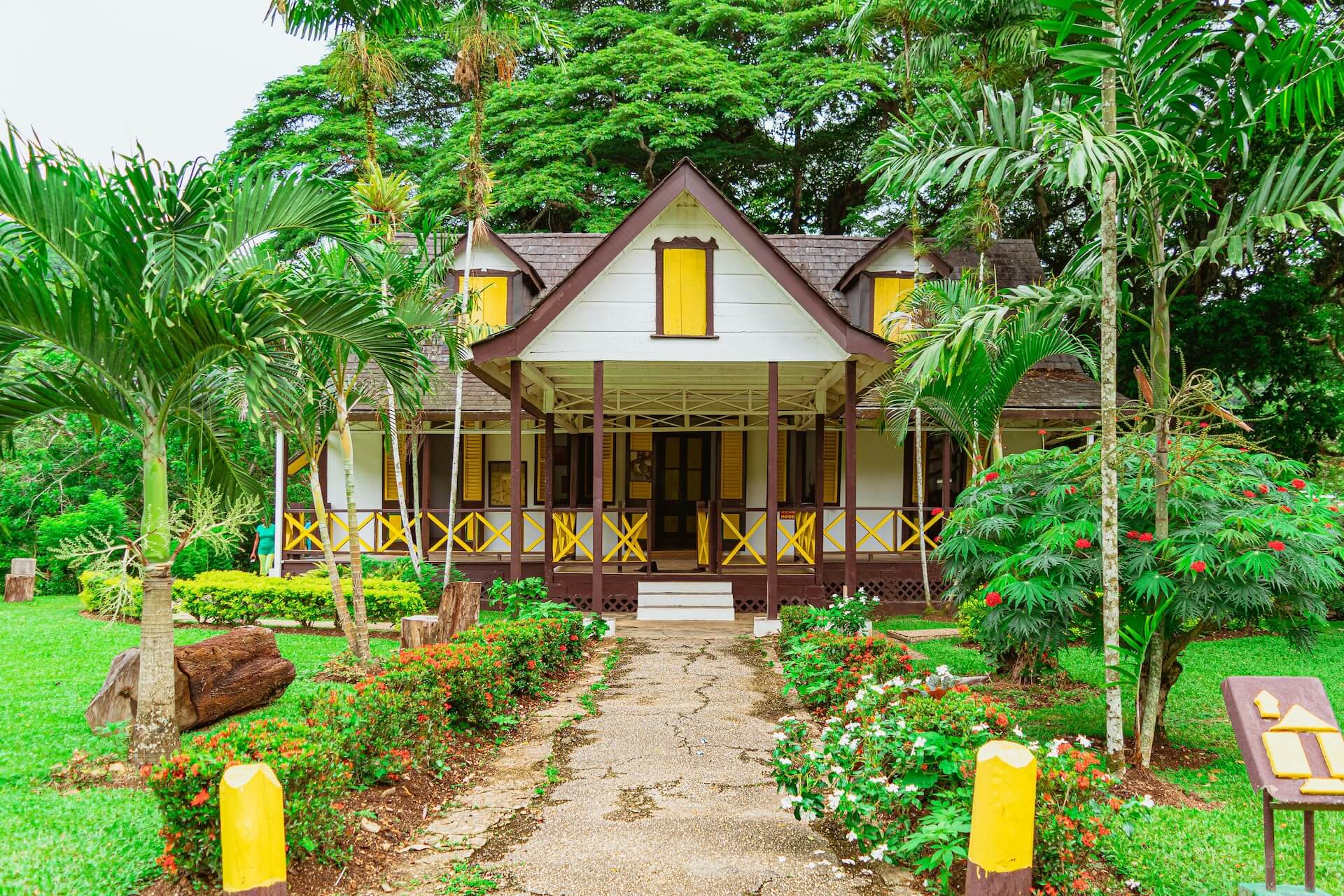
Trinidad’s Cultural Landscape at a Glance
Trinidad’s most important cultural sights are spread across the island, but a few areas stand out. Port of Spain holds the strongest concentration of civic history and architecture, Central Trinidad is home to some of the country’s most significant Hindu heritage sites, and the wider urban landscape preserves the rhythms of Carnival, steelpan, religion, and food culture.
Highlights
- Historic Port of Spain and the Magnificent Seven
- Woodford Square and the city’s civic history
- Temple in the Sea and Central Trinidad’s religious heritage
- Steelpan, panyards, and Carnival culture
- Museums, heritage buildings, and food districts
Historic Port of Spain
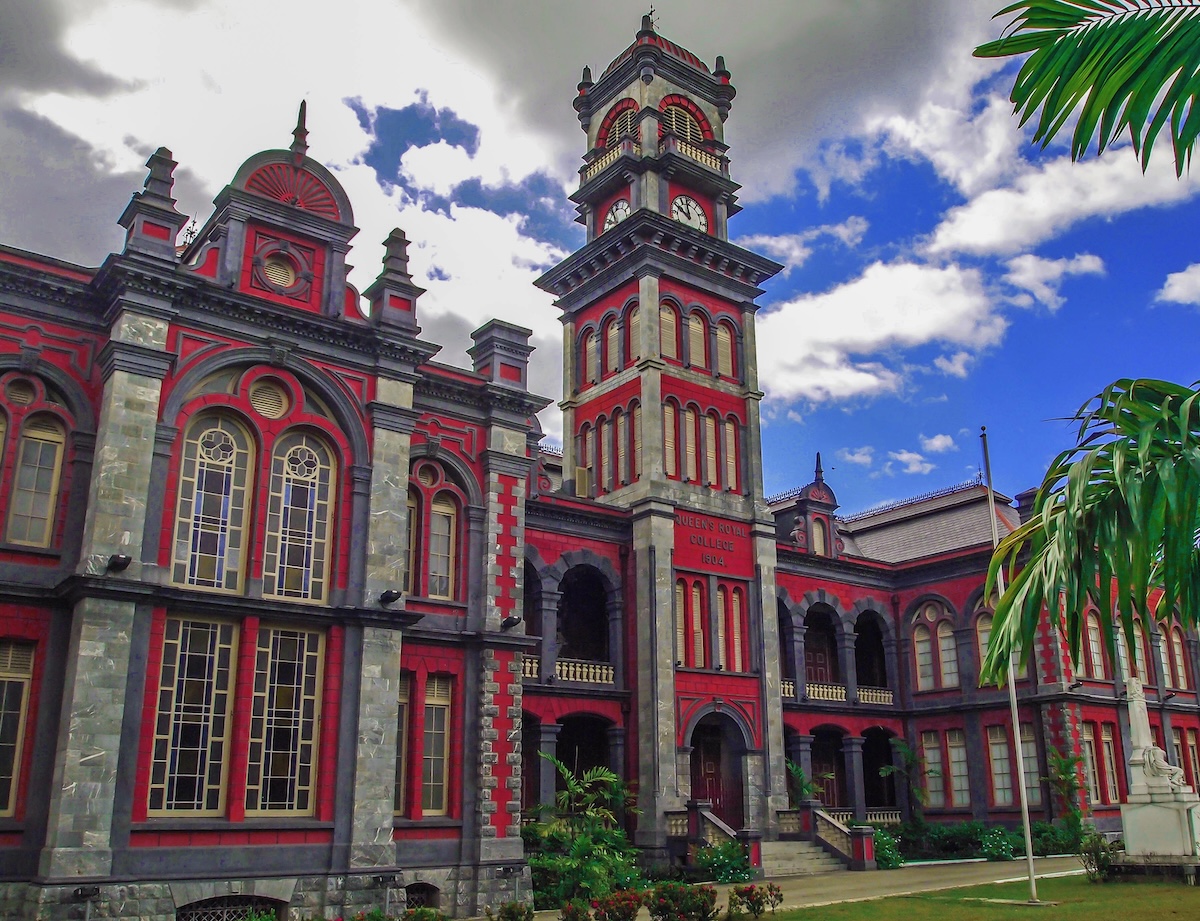
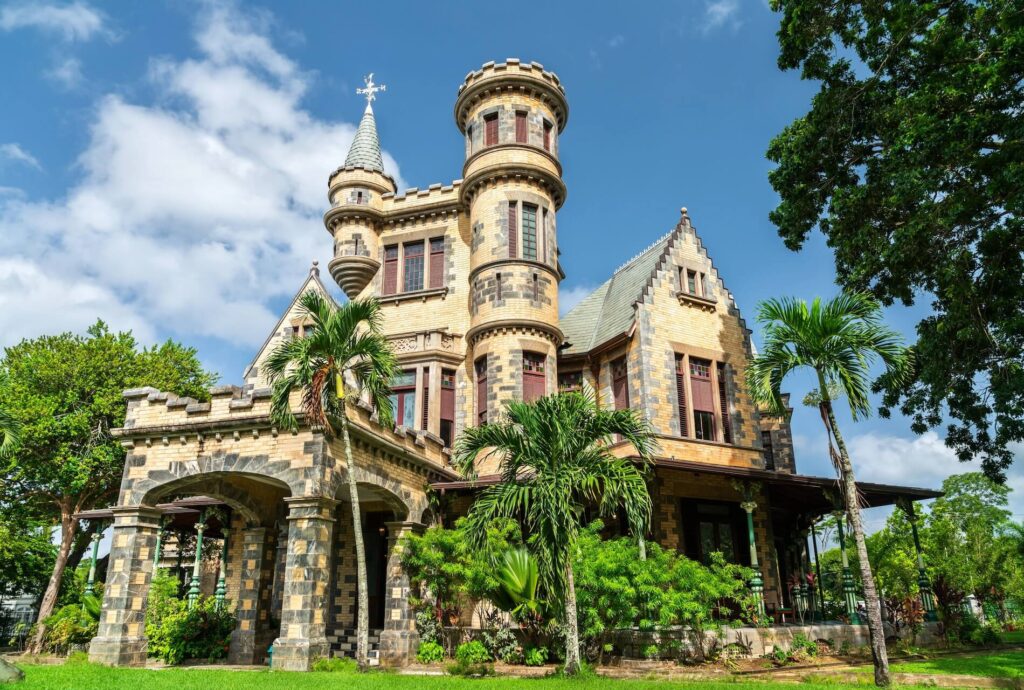
Port of Spain is the natural starting point for cultural sightseeing in Trinidad. The capital contains the island’s densest concentration of historic buildings, public institutions, and civic landmarks, especially around Woodford Square, Independence Square, and the Queen’s Park Savannah.
The best-known architectural grouping is the Magnificent Seven, a row of early 20th-century buildings along the western edge of the Savannah. These landmarks reflect Trinidad’s colonial and postcolonial history, but they also sit within a city that still feels busy, layered, and lived in.
Why start here?
- strongest concentration of historic architecture
- key insight into civic and political history
- direct connection to Carnival, steelpan, and public culture
What to Expect in Port of Spain
- grand colonial-era buildings beside busy commercial streets
- public squares with political and historical significance
- a city best explored slowly rather than rushed
Woodford Square and Civic Heritage
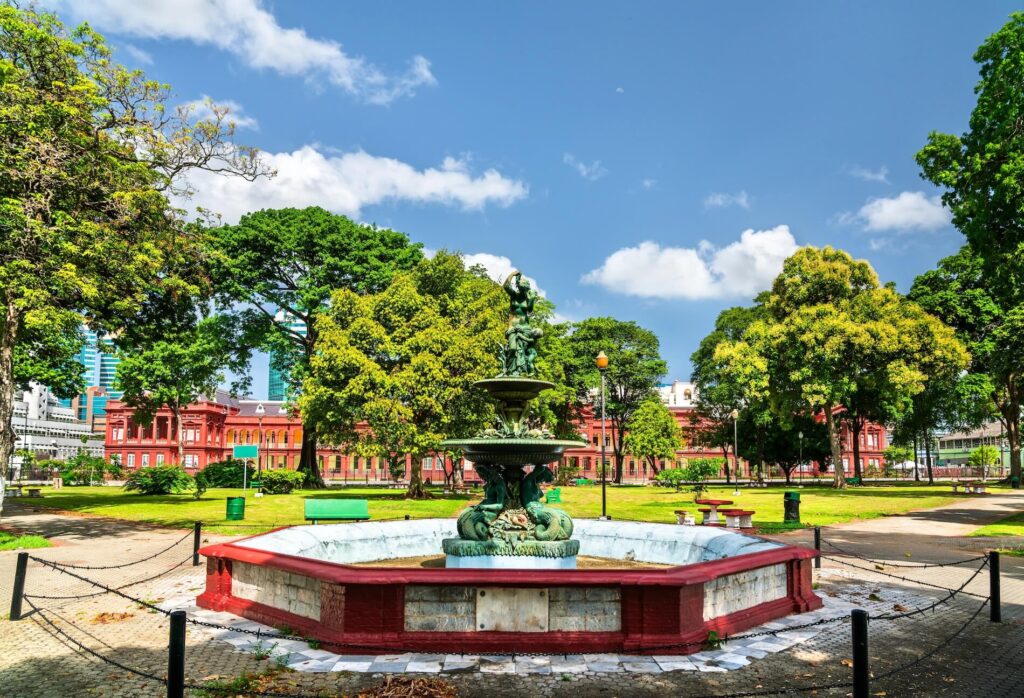
Woodford Square is one of the most important public spaces in Trinidad. More than just a city square, it is tied to the island’s political history, protest culture, and national memory. It has long served as a place of public speech and civic expression, especially in the years surrounding independence and the rise of modern Trinidadian politics.
For visitors, it is one of the clearest places to see how public space and national history intersect in Port of Spain.
What to Expect
- less of a “tourist attraction” than a civic landmark
- strongest when understood in historical context
- best combined with a wider Port of Spain walk
Sacred Sites and Religious Heritage
Religion is one of the clearest ways to understand Trinidad’s cultural diversity. Hindu temples, mosques, cathedrals, churches, and Spiritual Baptist traditions all form part of the island’s visible cultural landscape.
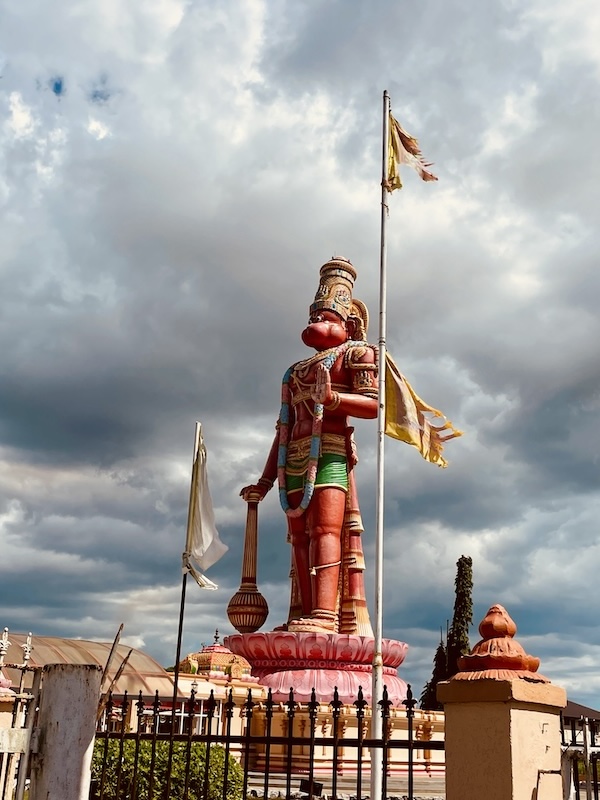
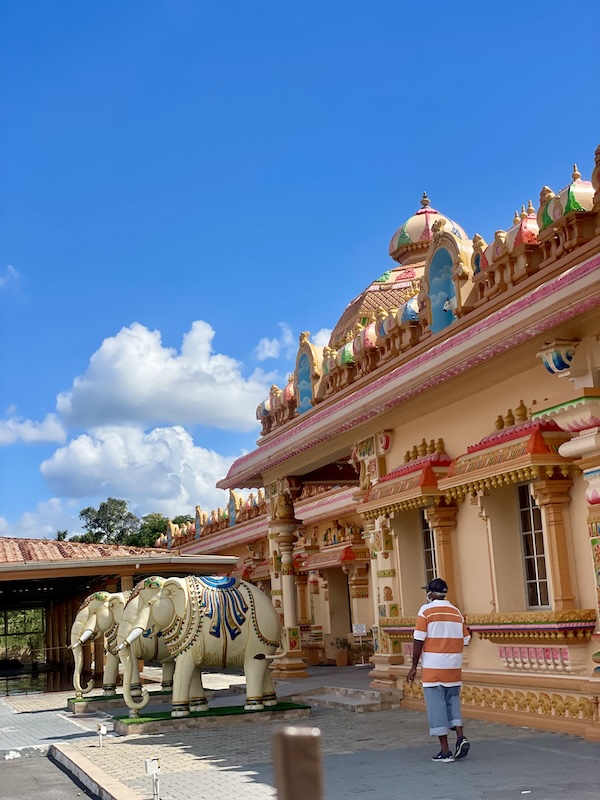
One of the best-known heritage sites is the Temple in the Sea at Waterloo, built by Seewdass Sadhu after he was prevented from worshipping on private estate land. Nearby, the Hanuman Murti at the Dattatreya Yoga Centre in Carapichaima is one of the country’s most recognizable religious landmarks.
Together, these sites help explain the importance of Indo-Trinidadian heritage to the island’s wider cultural identity.
What to Expect at Religious Sites
- active places of worship, not museum spaces
- modest dress and respectful behaviour are important
- some sites are most meaningful when visited with context
Steelpan, Music, and Carnival Heritage
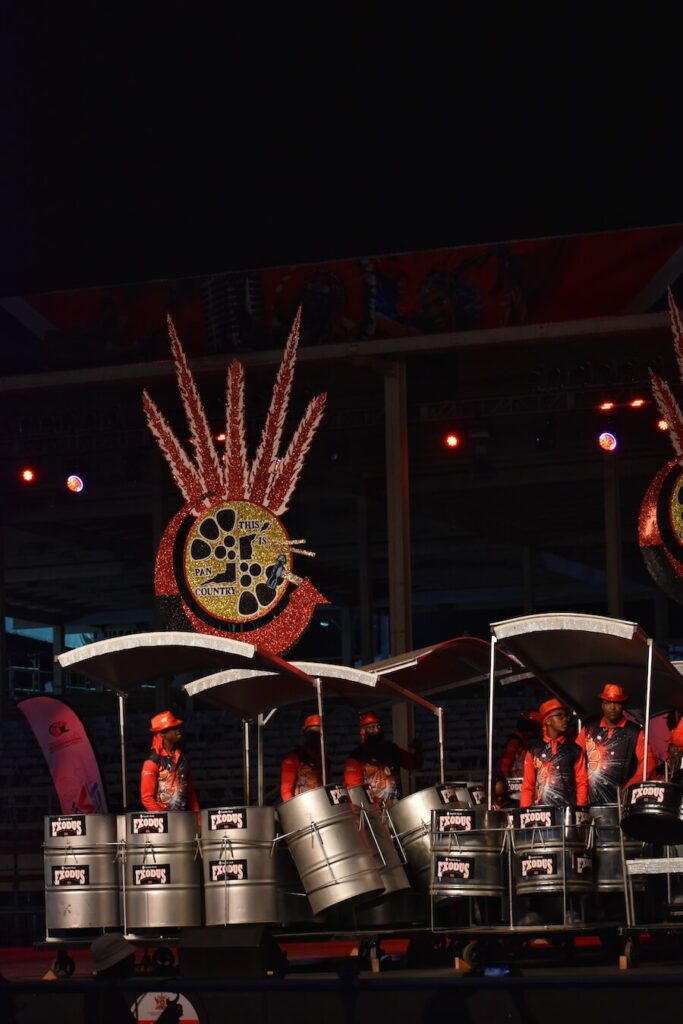
Few cultural sights in Trinidad can be separated from music. Trinidad and Tobago is the birthplace of the steelpan, and Carnival remains one of the country’s defining cultural expressions. But the most meaningful sights here are often not static monuments. They are panyards, rehearsal spaces, mas camps, and event grounds that become especially alive in the Carnival season.
The Queen’s Park Savannah is central to this cultural geography, hosting major Carnival events and serving as one of the capital’s most symbolically important public spaces.
Cultural highlights
- steelpan as Trinidad’s national instrument
- panyards as living cultural spaces
- the Savannah as a Carnival landmark
- mas camps and performance culture tied to the Carnival calendar
What to Expect
- best experienced during the lead-up to Carnival, but relevant year-round
Central Trinidad and Indo-Trinidadian Heritage
Central Trinidad is essential for understanding the island beyond Port of Spain. This is where many of the country’s major Hindu heritage sites are located, and where the legacy of indentureship remains especially visible in religion, community life, and food culture.
The cultural landscape here is less monumental than in the capital, but often more revealing. Temples, shrines, food stops, and roadside landmarks all speak to continuity, migration, and identity in ways that are easy to miss if visitors focus only on the capital.
Why visit Central Trinidad?
- key region for Indo-Trinidadian history
- home to major temple sites
- strong connection between heritage, religion, and food
Museums, Heritage Houses, and Interpretation
For visitors looking for more formal historical context, Port of Spain’s museums and heritage institutions remain important. The National Museum and Art Gallery traces its origins to the Royal Victoria Institute, established in 1892, while Fort San Andrés offers insight into the city’s earlier waterfront and colonial history. Fort San Andrés was restored in 1995 and converted into the Museum of the City of Port of Spain.
This section should also include the Trinidad and Tobago Carnival Museum in Port of Spain. It is based in the old Penny Bank building on Charlotte Street and adds useful context on mas, pan, calypso, and Carnival history.
What to Expect:
- National Museum and Art Gallery for broad historical and artistic context
- Fort San Andrés for Port of Spain’s older waterfront and colonial layers
- Carnival Museum for mas, pan, calypso, and Carnival history
Food Culture and Everyday Public Life
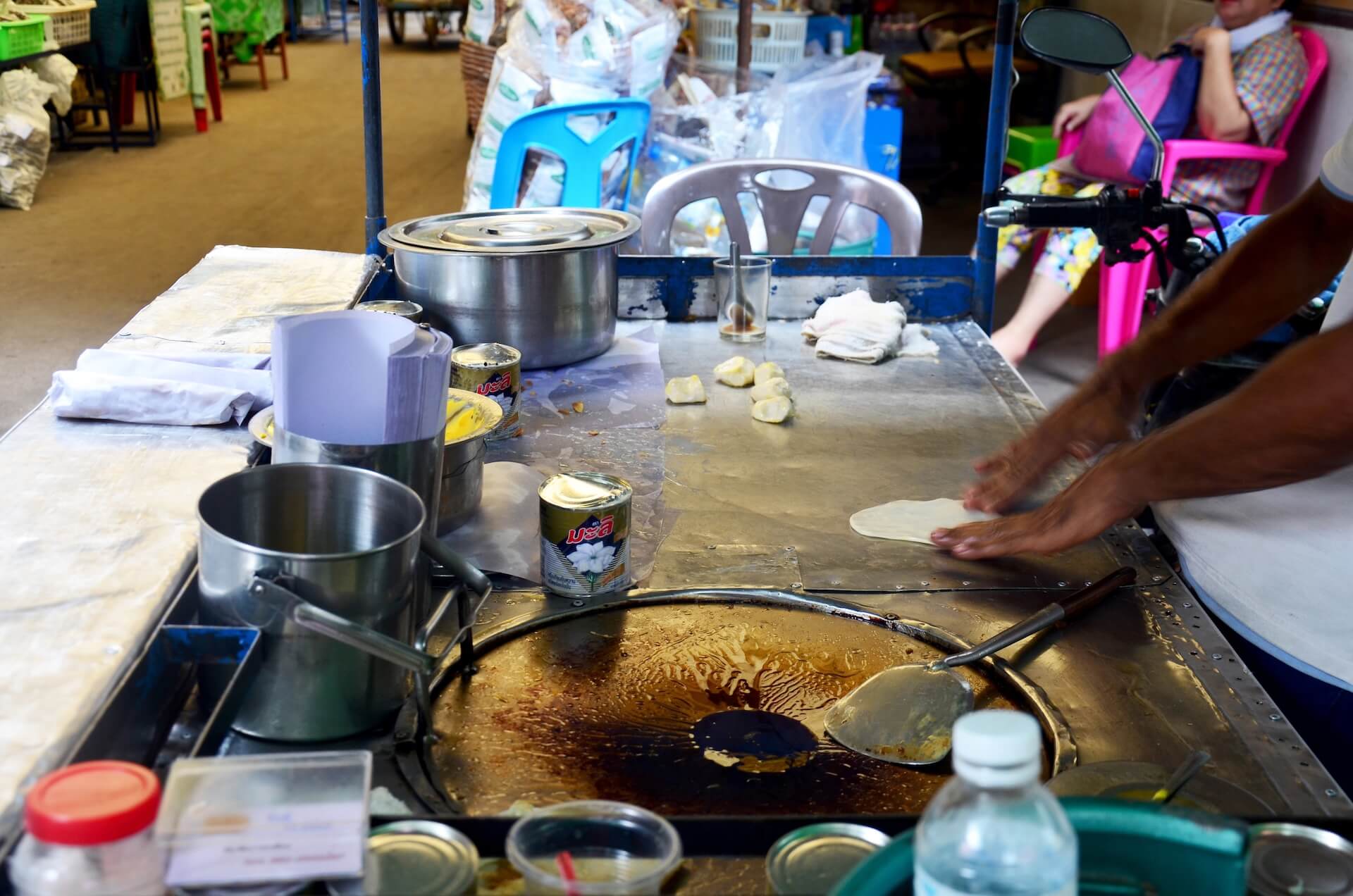
Some of Trinidad’s most revealing cultural sights are not formal landmarks at all. They are found in markets, food districts, roadside stalls, panyard limes, cocoa estates, and the everyday spaces where people gather, eat, and socialize.
That matters because culture in Trinidad is not confined to museums or historic buildings. It is equally present in the rhythm of public life — in what is cooked, sold, shared, and celebrated. A food tour can offer as much insight into the island as a heritage walk, while cocoa tours add another layer by connecting landscape, agriculture, and history to the present-day experience of Trinidad.
Cultural life also happens here
- street food routes, market culture, and local food tours
- cocoa estates and chocolate experiences rooted in Trinidad’s agricultural heritage
- everyday gathering places where food, music, and community come together
- neighborhoods where public life reveals the island’s layered cultural identity
Recommend Culture tours
From rural food routes to cocoa estates, heritage valleys, Carnival history, and social creative experiences, these tours reveal a broader, more textured side of Trinidad.
History
Lopinot Valley Tour
Heritage, local cuisine, and one of the island’s most distinctive valleys.
Food Culture
Taste of Toco
A scenic food journey through Trinidad’s northeast.
COCOA TOUR
Ortinola Great House
A cocoa-focused experience combining estate history, pod tasting, cocoa dancing, and chocolate making. Visit Trinidad lists Ortinola as a guided great house and cocoa estate tour.